
The world divides into two categories. People obsessed with dogs, and everybody else.
This week, a lot of us cried over a dog we never met.

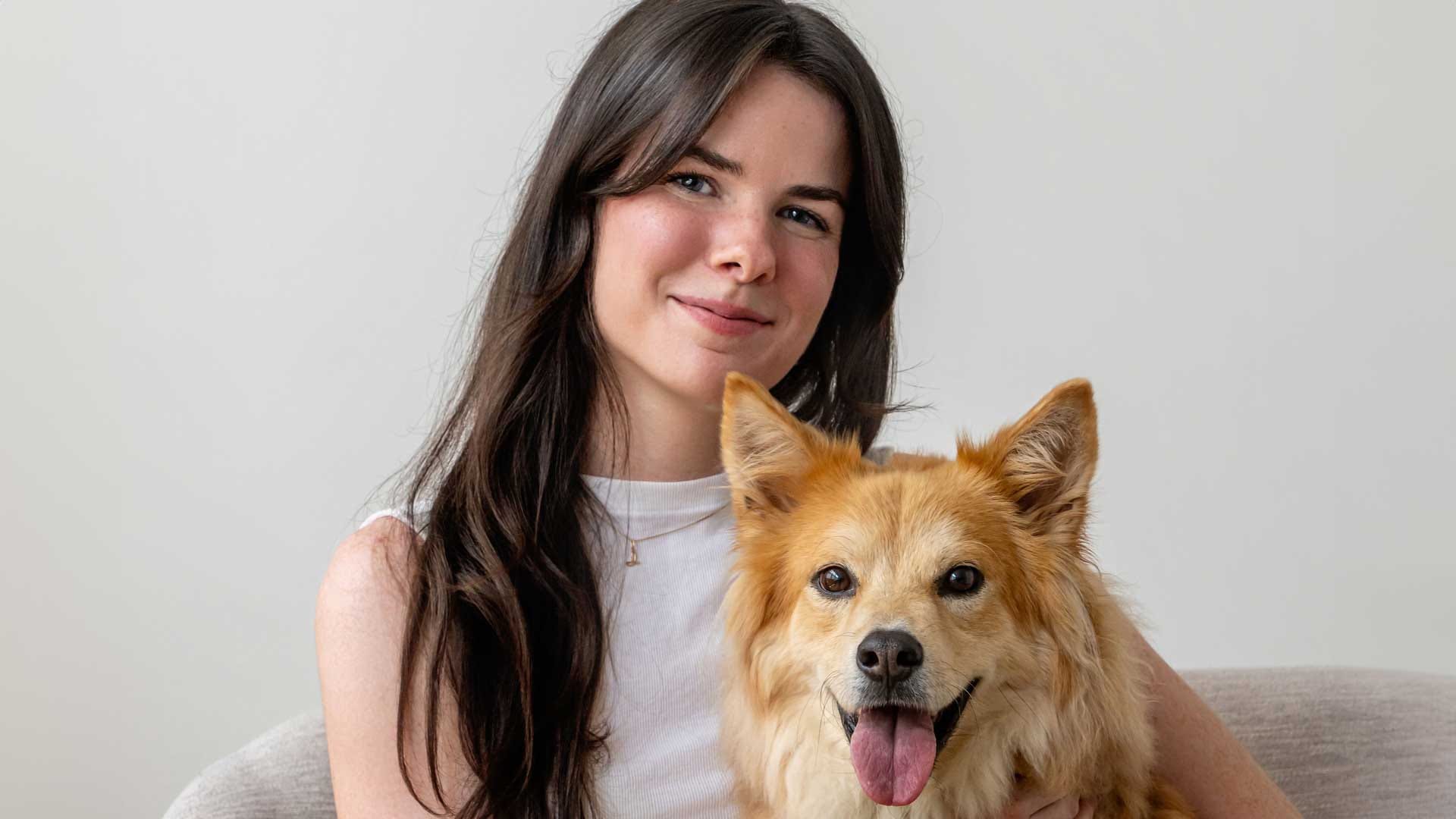
On 22 July, Isabel Klee sat down in front of a camera and told close to nine hundred thousand people that she had made the decision to say goodbye to Simon. He was a rescue, a jindo and miniature pinscher and Portuguese podengo mix, and the fifth dog she ever fostered. She adopted him. Four weeks later he had his first seizure. She kept him for seven years. A mass appeared on his liver in November. In May it was confirmed as cancer. By July the seizures were arriving faster than the medication could hold them, and the prognosis she had been given the day before was eight to ten months.
She did not announce it and go quiet. She set a date, and then she gave the days that were left to the things Simon loved most. There was a last hike. He came back down to the car in a stroller.
Read it again.
Somebody organised a celebration around the final days of a dog’s life. Somebody spoke about a dog, publicly, in the language a person keeps for the great love of their life. And several hundred thousand people watched it without once thinking it excessive. They recognised it. They cried at the first sentence, the way you cry at something you already knew.
The loss belongs to her, and we are not going to write about dog grief today. It deserves its own pages and it will get them, properly, when the time is right.
The recognition belongs to everybody who watched, and the recognition is what this piece is about.
Who does this? Who plans a last good day for a dog, and why do those particular words go straight through one half of the world and land nowhere at all in the other?
That is the division. It gets said constantly around here. The world divides in two. There are people who are obsessed with dogs, and there is everybody else.
Nobody has ever run the census, and nobody needs to. We are millions. We are almost certainly billions. What happened this week was one account, in one language, and it took several hundred thousand people down at once. Not one of them needed it explained, and every one of them already knew which side of the line they were standing on.
The Word We Are Not Going to Apologise For
Obsessed is a diagnosis when they say it. It is an address when we do.
It starts at a very precise moment, and everybody on this side can tell you theirs. It is the moment the entire organisation of your life begins turning around one being, and the moment the dog stops being a dog and becomes somebody. Somebody important. Sometimes the most important person in your life.
After that, nobody has to decide anything ever again. You take the ferry instead of the plane, because the hold was never once on the table. You know the name of every dog in the park and not one of the humans. There are forty thousand photographs on your phone and thirty-nine thousand of them are the same face. You leave your own dinner early and nobody at that table asks why.
We know exactly how that sounds from outside. We are going to keep doing it.
Everything At Once
Isabel Klee has spoken about Simon as the love of her life. She has also thanked Jacob, out loud and in public, for understanding that Simon was the love of her life.
A woman thanks the man she is going to marry for accepting that the great love of her life is a dog. He accepts it. Nobody in that household experiences the sentence as an insult or a demotion.
That is the one that went straight through us.
And on this side of the line, several hundred thousand people heard it and needed not one word of it explained, because they already knew exactly what the dog is doing in that household. It is the child, in the strict operational sense, the one with whom no negotiation is possible and around whom the day gets built. The friend who is delighted to see you every single time, for twelve years, without one exception, which is a record no human being has ever come close to holding. The great love that takes the middle third of the bed and decides, nightly, which of you to lie against. It is the reason somebody reading this got out of bed on a morning when nothing else on earth would have worked, the patience learned from a creature who could not be reasoned with and refused to hurry, the forgiveness handed over instantly for things you have still not forgiven yourself for, and the one idiotic repeatable piece of behaviour that makes a grown adult laugh out loud, alone, in a kitchen, at eight in the morning.
All of it, at the same time, and not one part of it conditional.
Love With No Words In It
Here is the strange part. None of it is ever said. Not once, in either direction.
The dog gets up, crosses three metres of floor, and lies down against the bathroom door because that is where you happen to be. You get up at 4:12 in the morning, throw a coat over nothing at all, and take the stairs two at a time. Neither of you explains. Neither of you has ever explained.
We have written before about the pyjamas, the plastic bag and the omertà of the midnight sidewalk. The joke in that piece was the outfit. The serious thing was sitting underneath it, and it is this. Nowhere else in a human life is love impossible to claim, perform or negotiate into existence. It can only be demonstrated, daily, in acts that nobody is watching. Isabel Klee took a dying dog on one last hike and brought him back down to the car in a stroller. Nobody on this side needed that translated.
There is one more thing that never gets said, and everybody knows it anyway. Twelve to fifteen years. That is the deal, and every person on this side of the line knew the number on the day they signed it. You take home a life that will be over within a decade and a half, and you let it become the centre of everything regardless. From outside, that reads as a failure to think it through. It is the opposite. It is a decision taken with the ending fully in view, by people who did the arithmetic first and signed anyway.
The Other Side (Poor Things)
We should probably say a word about the second half of the world. The non-dog-obsessed. Team B.
They are the people who come home to a silent flat and call it peace. Who have never once been met at a door by somebody losing their entire mind with joy over the fact that you went out for twenty minutes and then came back.
Their sofas are immaculate. Their holidays involve no logistics whatsoever, unless they have a human child, in which case we will concede that they have suffered. They can leave a restaurant the moment they feel like it, and they have never once had to tell an office that they cannot come in today because somebody at home is sick, and then brace themselves for the word “who”.
They will tell you, sincerely and at length, that they made the sensible choice. They have no idea what they are missing, and there is no way on earth to tell them, because none of it makes any sense at all from outside.
Now, sincerely. We understand being frightened of dogs, which is almost always founded on something that genuinely happened. We understand plain indifference, which requires no justification whatsoever. We understand the households and the cultures in which the dog belongs outside the house. And we understand that from where you are standing, all of this looks like an extraordinary amount of feeling spent on an animal.
You do not owe us an explanation. We are not offering one either.
But you will never know what it costs. And that is the only part of this we would not wish on anybody.
The Part We Cannot Translate
Because the ending does arrive.
The dog stops eating. There is a waiting room at an hour that exists on no normal calendar. There is a date in the diary that you set yourself, which is a specific and unshareable weight that nobody warns you about.
And then there is the sentence. It is never said cruelly. It is said kindly, by decent people, who mean well.
“It was a dog.”
There is no reply to that. There is no reply because the two halves of the world do not share the vocabulary a reply would require. Somebody on Team A goes back to a desk on Monday morning and delivers a full day of work, and nobody in that room understands that a member of the family has died.
That is the loneliest thing about being on this side. It is also exactly why close to nine hundred thousand people spent this week watching a writer in Brooklyn say goodbye. For once, not one of them had to explain it to anybody.
One Last Thing
Simon was not our dog. We never met him. He belonged to a writer in Brooklyn and to the long line of foster dogs who came through that apartment over the years and were made less frightened by the fact that he was in it. Everyone on Team A knew him anyway, because everyone on Team A has one.
So why are we like this? Here is the answer, and it is the least comfortable one on offer.
We are like this because the date exists, and because we have known about it from the first afternoon.
With a human child, the whole arrangement rests on you going first. You are not meant to outlive them. That love is built to be handed forward rather than ended in a room you drove to yourself. With a dog, the terms are on the table before you have got the collar on. Fifteen summers. Fifteen winters if you are lucky, and a few more on top if you have genuinely won the lottery of a life. Nobody hides the number from you and nobody softens it.
That is the entire explanation. Scarcity, and what scarcity does to attention. Everything sharpens when the end of it is visible from the beginning. You notice more. You take the longer way home. You let them have the bed, because the hair comes off with a vacuum cleaner and the time does not come back.
It is happiness running through your fingers the whole time you are holding it.
That is what obsessed means. Signing, in advance and in full knowledge, for the worst grief of your life, in exchange for a decade or so of being met at the door by somebody who cannot believe their luck that you came back.
Ask anyone on this side of the line and they will tell you the same thing, quietly, without a second of hesitation. It is one of the largest joys available on this earth, and we would not trade it for anything at all.
— Datcha
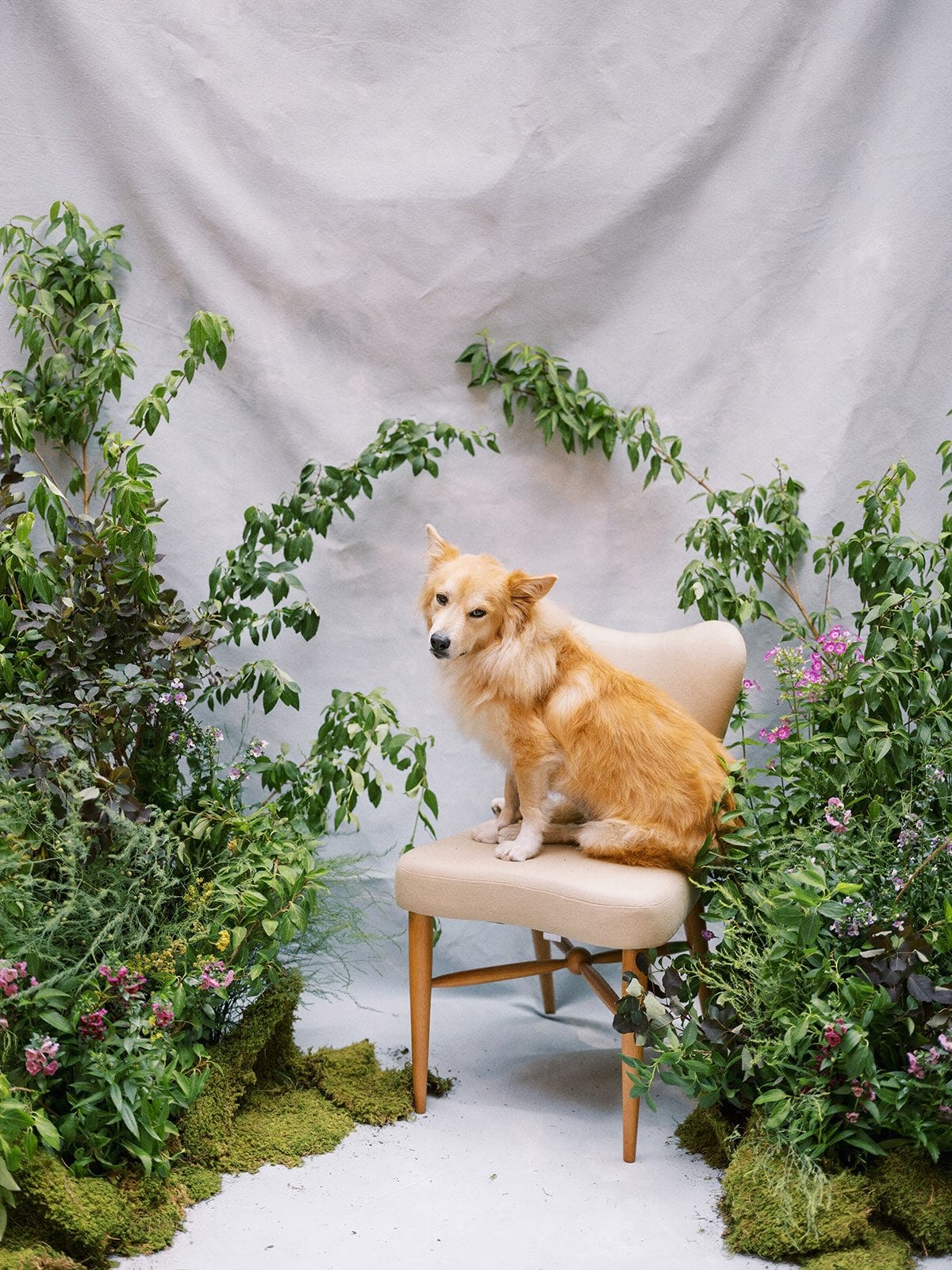
In memory of Simon. A dog who was loved a very long way beyond his own family.
An "exclusive" club I'm very proud to be part of. No one should ever have to apologise or be shamed for loving a creature who brought so much joy and light and laughter into their lives.
I'm crying again just reading this .. I guess there is no doubt about which side of the fence I'm on 😛🐾